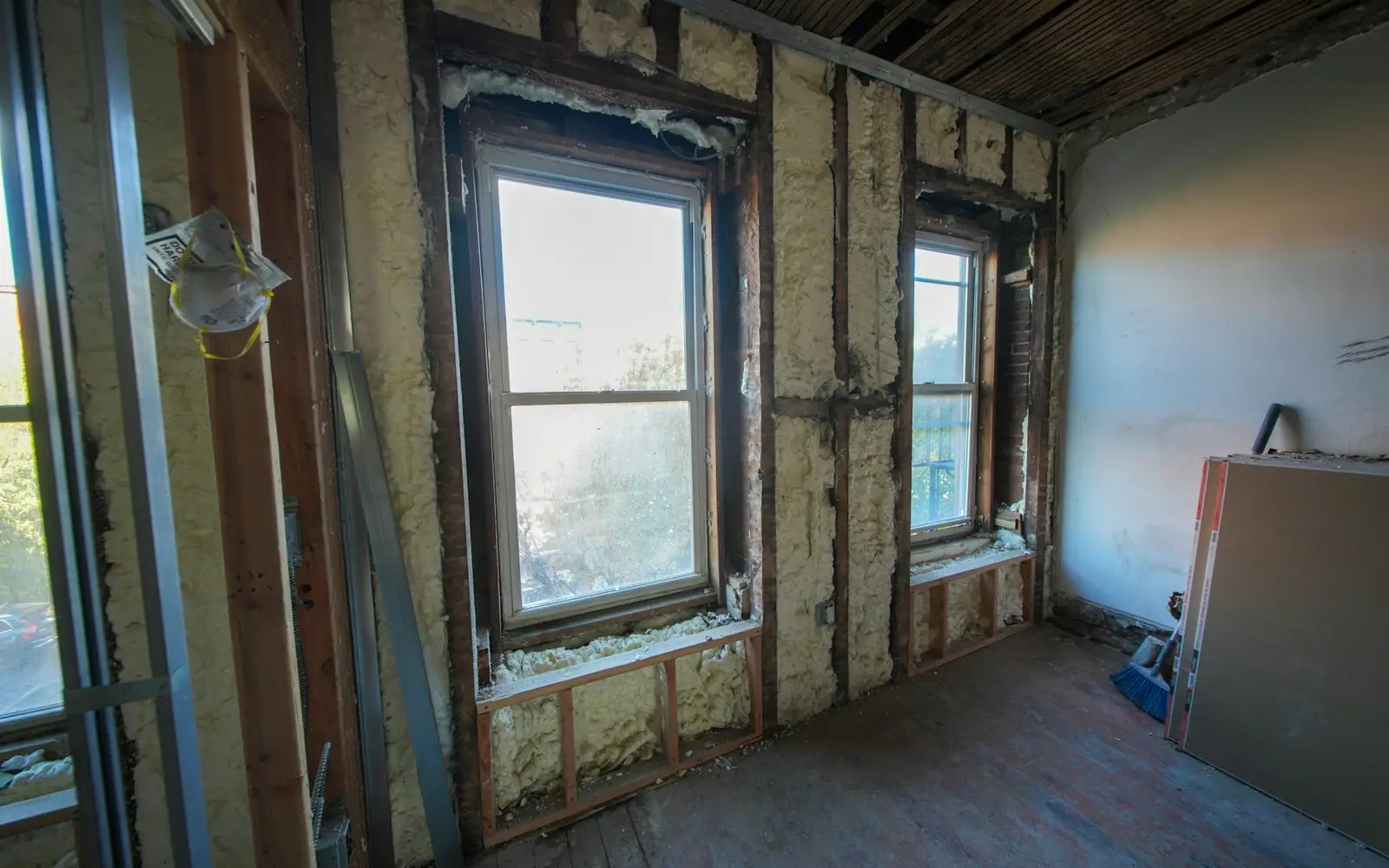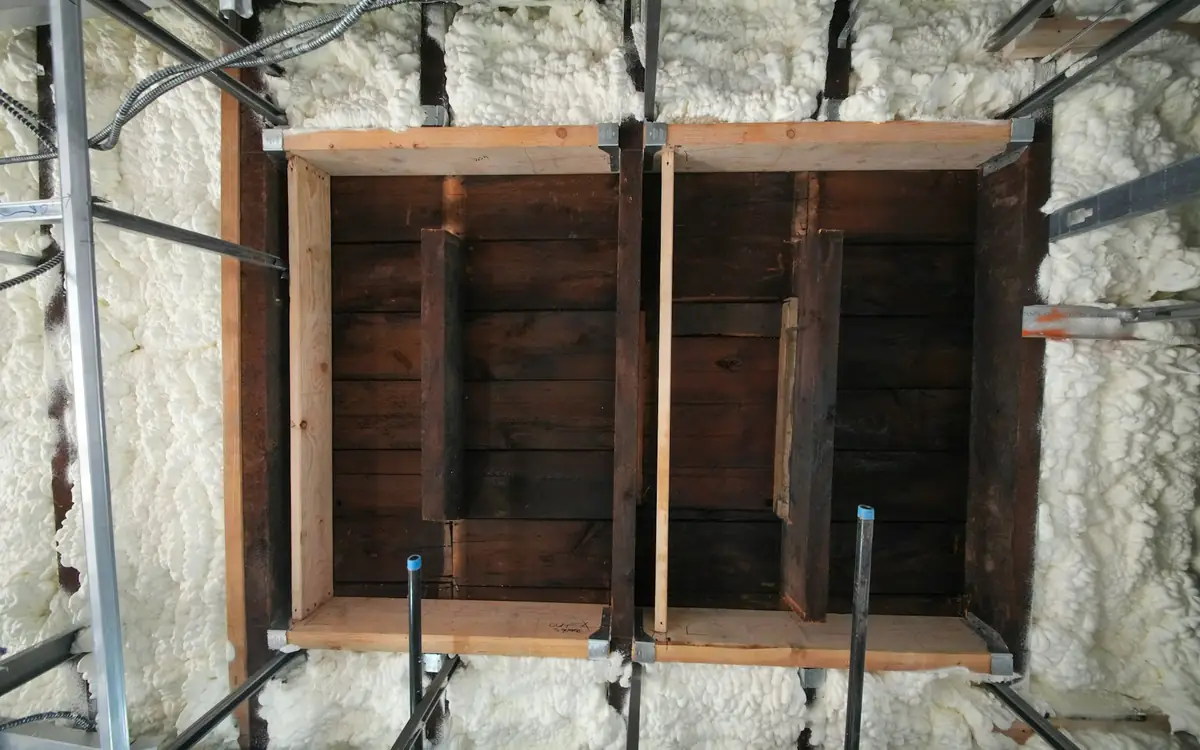
Two Different Products
Spray foam comes in two main types. Both are sprayed as a liquid that expands and hardens in place, and both seal air leaks very well. The difference is in the structure of the cells inside the foam, and that changes how each one performs.
Neither type is always better. Many Spokane homes end up with both, with each one used where it makes the most sense. A local installer can walk through your attic, walls, crawl space or shop and recommend the right product for each area.
Open-Cell Spray Foam
- Soft and spongy, with tiny cells that are not fully closed
- Expands a lot, filling large cavities in a single pass
- Lower R-value per inch, so it needs more thickness
- Good at blocking air and dampening sound between rooms
- Lets moisture pass through, so it is not a vapor barrier
- Usually costs less per square foot of coverage
- Common in attic rooflines, interior walls and above-grade framing

Closed-Cell Spray Foam
- Dense and rigid, with cells that are fully closed
- Higher R-value per inch, useful where space is tight
- Acts as a vapor retarder at typical thicknesses
- Adds some strength to walls and roof decks
- Resists water, making it a good fit below grade
- Costs more per square foot of coverage
- Common in crawl spaces, rim joists, metal buildings and pole barns
How to Decide
Start with the location and the main problem you want to solve. If moisture or condensation is the concern, such as in a crawl space or metal shop, closed-cell is usually the answer. If you need to fill deep cavities on a budget and moisture is not an issue, open-cell is often a practical choice.
Budget plays a part too. Closed-cell foam costs more, but in a tight space you may need fewer inches to reach your target R-value. Open-cell foam is cheaper per inch, but deep cavities can take a lot of it. Your installer can price out both options for the same area.
Ask each contractor which product they recommend for each area, the planned thickness and the resulting R-value. Comparing quotes on those details, not just total price, will help you make a fair comparison. Also check with your utility, such as Avista, about any current insulation rebates before you schedule the work.